
Indigenous Governance Database
Environment and Natural Resources
Chemşhúun Pe'ícháachuqeli (When our Hearts are Happy): A Tribal Psychosocial Climate Resilience Framework
Tribes are keenly aware of the interconnection between health, nature, and personal wellbeing. Leading experts in climate change and wellbeing are increasingly encouraging communities to be proactive about protecting and building psychological, social, cultural, and spiritual wellbeing. Often…
A global assessment of Indigenous community engagement in climate research
For millennia Indigenous communities worldwide have maintained diverse knowledge systems informed through careful observation of dynamics of environmental changes. Although Indigenous communities and their knowledge systems are recognized as critical resources for understanding and adapting to…
Governor Stephen Roe Lewis Distinguished Tribal Leader Lecture
Governor Stephen Roe Lewis of the Gila River Indian Community visited the University of Arizona to speak at January in Tucson: Distinguished Tribal Leader Lecture sponsored by the Native Nations Institute and held at the Indigenous Peoples Law & Policy program at James E. Rogers College of Law…
Rebecca Tsosie: Indigenous Sustainability and Resilience to Climate Extremes
The School of Geography & Development presented the “My Arizona” Lecture of Prof. Rebecca Tsosie, Regents Professor of Law at Univeristy of Arizona on Friday, November 1, 2019. Her lecture, "Indigenous Sustainability and Resilience to Climate Extremes: Traditional…
Vernon Masayesva: Self-Governance and Protecting Water
Former Tribal Chairman of the Hopi Nation and Executive Director of Black Mesa Trust, Vernon Masayesva relays his thoughts about advocating for self-governance and protection of water rights for Indigenous people. His pursuits in holding accountability of mining in Hopi territory has made Vernon…
Daryle Rigney: Asserting Cultural Match and Native Nation Building in Australia
Daryle Rigney brings his expertise and first-hand experiences as a citizen of Ngarrindjeri Nation in South Australian to share his thoughts about Native Nation Building for the Ngarrindjeri Nation. He is a Professor of Indigenous Strategy and Engagement at College of Humanities Arts and…
Water is Life video series Part 3 Mni Wiconi
The Native Nations Institute produced a three-part educational video series called, “Water is Life." The video series brings a Native nation building perspective to the conflict over the Dakota Access Pipeline and features interviews with LaDonna Brave Bull Allard, former tribal historic…
Water is Life video series Part 2 Oceti Sakowin
The Native Nations Institute produced a three-part educational video series called, “Water is Life." The video series brings a Native nation building perspective to the conflict over the Dakota Access Pipeline and features interviews with LaDonna Brave Bull Allard, former tribal historic…
Water is Life video series Part 1 The Lakota and Dakota People
The Native Nations Institute produced a three-part educational video series called, “Water is Life." The video series brings a Native nation building perspective to the conflict over the Dakota Access Pipeline and features interviews with LaDonna Brave Bull Allard, former tribal historic…
Preparing for the health impacts of climate change in Indigenous communities: The role of community-based adaptation
Climate change presents substantial risks to the health of Indigenous peoples. Research is needed to inform health policy and practice for managing risks, with community based adaptation (CBA) emerging as one approach to conducting research to support such efforts. Few, if any, studies however…
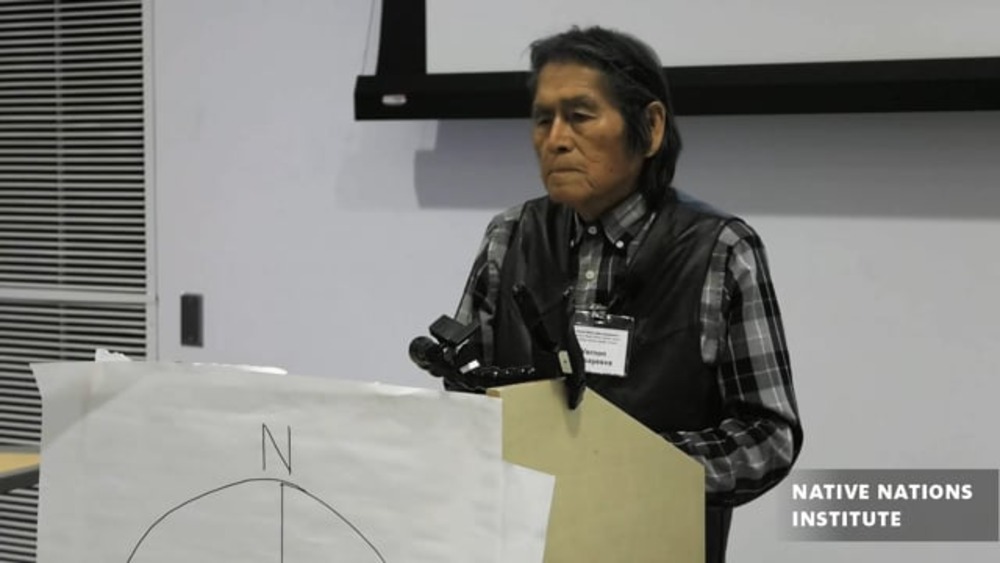
Vernon Masayesva Keynote: Water Ethics Symposium
Vernon Masayesva (Hopi) is the Executive Director of Black Mesa Trust and leading advocate for protecting water resources for the Hopi Nation. He's a Hopi Leader of the Coyote Clan and former Chairman of the Hopi Tribal Council from the village of Hotevilla who has worked for decades…
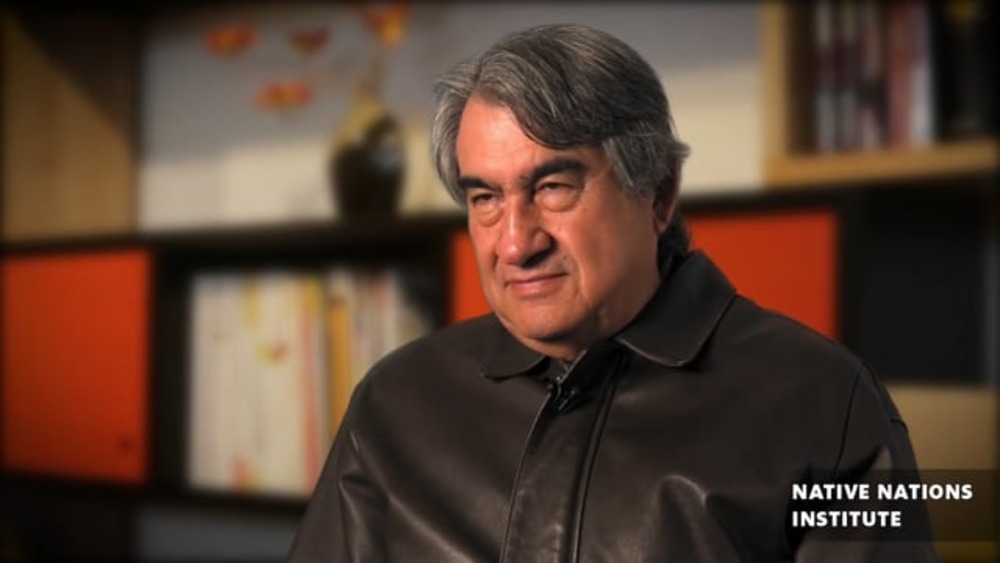
Greg Cajete: Indigenous governance and sustainability
Greg Cajete, Tewa of the Santa Clara Pueblo and a renowned scholar and author on indigenous education serves as the Director of Native American Studies at the University of New Mexico. His works have merged native history, cultural practices, and knowledge into the cross section of education…

Ahwahsiin (The Land/Where We Get Our Food)
Indigenous Peoples’ knowledge and food systems are fast disappearing but are of the utmost importance, not only for sustaining Indigenous Peoples but also for providing alternative paradigms for coping with diverse ecosystems in a changing global environment. This research examines Blackfeet…
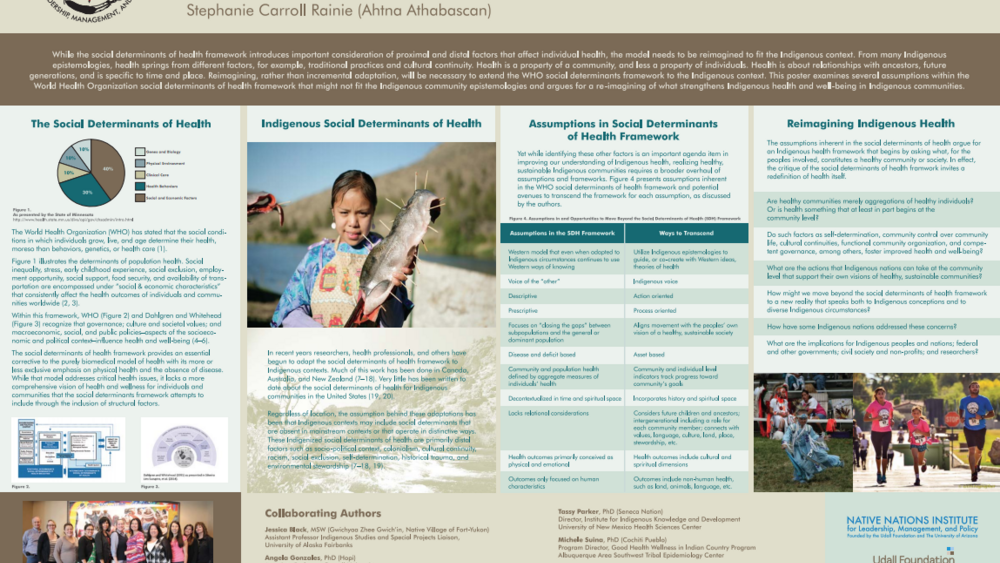
Reimagining Indigenous Health: Moving Beyond the Social Determinants of Health
Senior researcher Stephanie Carroll Rainie critiqued the application of social determinants of health models in Native communities and challenged readers to reconsider how they think about Indigenous health.
Indigenous Land Management in the United States: Context, Cases, Lessons
The Assembly of First Nations (AFN) is seeking ways to support First Nations’ economic development. Among its concerns are the status and management of First Nations’ lands. The Indian Act, bureaucratic processes, the capacities of First Nations themselves, and other factors currently limit the…
Newtok Relocation Effort
Scientists and politicians spend hours debating the facts of climate change, but in many places damaging changes to the local environment are already a reality. In the past decade, more and more human settlements have been threatened by catastrophic flooding, wildfires, or drought caused by…
Oneida Nation Farms
In the 1820s, a portion of the Oneida people of New York moved to Wisconsin, where they took up their accustomed practices as farmers. Over the next hundred years, the Oneida Nation lost nearly all its lands and much of its own agrarian tradition. In 1978, the Oneida Nation of Wisconsin established…
White Mountain Apache Wildlife and Recreation Program
The White Mountain Apache Wildlife and Recreation Program fulfills the dual role of performing all wildlife conservation and management and serving as a self-sustaining business enterprise based on the Tribe’s recreation/tourism industry. The program’s effective wildlife management techniques have…
Trust Resource Management (Salish and Kootenai)
For more than three decades, the Confederated Salish and Kootenai Tribes (CSKT) have been building capable governing institutions and taking over management of resources and programs previously managed by outsiders. Recognizing that self-management both allows the tribal government to determine its…
Red Lake Walleye Recovery Project
Clearly demonstrating that tribal nations not only have the ability to make large scale achievements in resource conservation, but that they can do so with unprecedented success, the Red Lake Walleye Fishery Recovery Project has brought the walleye fish population back from virtual extinction to an…