
Indigenous Governance Database
National

Two Possible Paths Forward for Native Disenrollees and the Federal Government?
Disenrollment, a seemingly innocuous term when used outside Indian country, has become a loaded word that rivals, if it does not surpass, “termination” as a concept that invokes fear and trembling in those natives who suffer its consequences. While the federal policy of termination in the 1950s was…
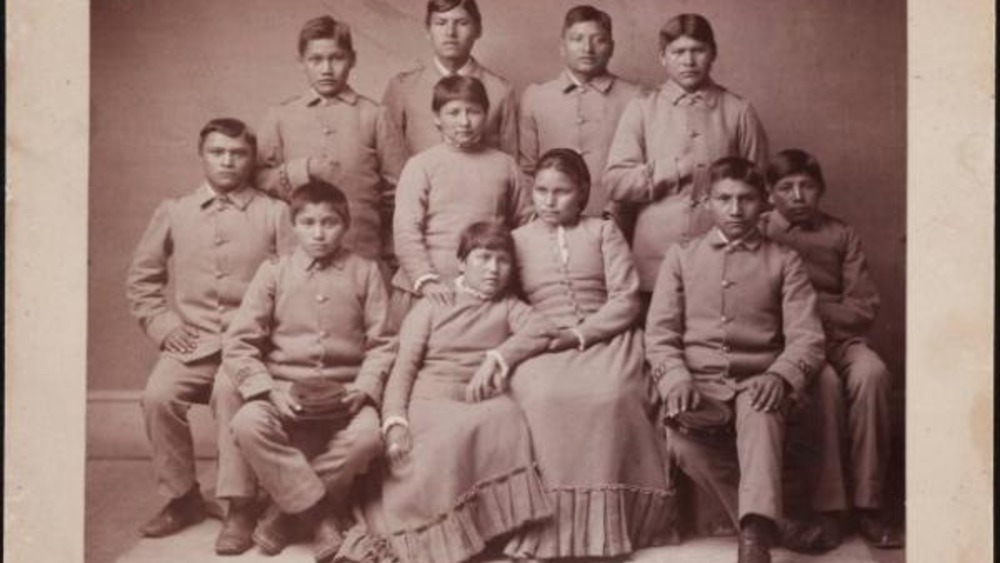
Indian Identity, Choice and Change: What Do You Choose?
Indigenous individuals and nations are faced with choices about identity, change and cultural continuity. The choices are not just mere faddish expressions but are deep decisions about culture, community, philosophy and personal and national futures. Many indigenous communities are divided over…
Indian Self-Determination and Sovereignty
If ever a concept grabbed hold of hearts and minds in Indian country in the past couple decades surely it would be that of sovereignty. Native people talk about it with reverence, demanding that it be respected by the federal government, and expect their tribal governments to assert it. Even the…
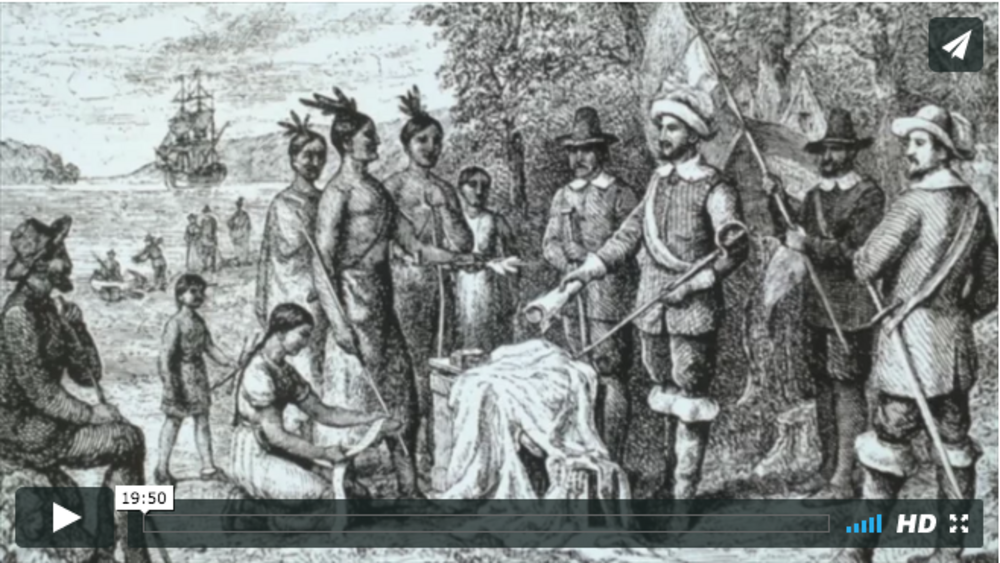
Web Extra: American Indians Confront 'Savage Anxieties'
This week Bill speaks with legal expert Robert A. Williams Jr. about how stereotypes of American Indians have been codified into laws and government policies, with devastating consequences. In this web extra, Bill speaks with Williams about why none of the Supreme Court justices “wants Indian…
Stronger Ethics, Stronger Research: Tribal Governance as a Key Community Health Speaker
2015 CRCAIH Summit Keynote Address by Dr. Malia Villegas, National Congress of American Indians, Policy Research Center.
Tribal Sovereignty: The Right to Self-Rule
This is an excerpt of a longer educational DVD produced to answer frequently asked questions about American Indian tribal governments and the roots of tribal sovereignty. Among other things, it discusses the U.S. Constitution's explicit acknowledgement of tribal sovereignty and Native peoples as…
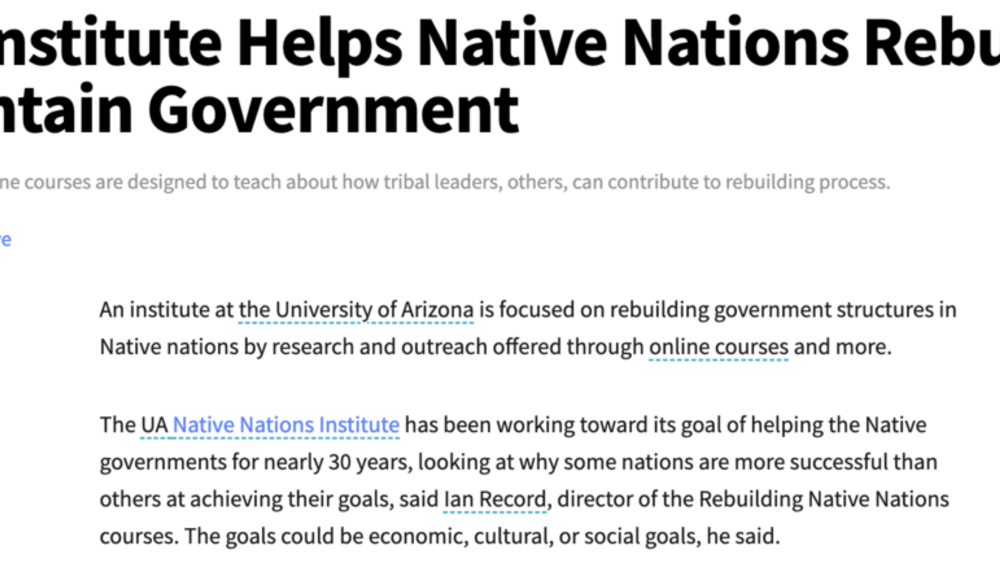
UA Institute Helps Native Nations Rebuild, Maintain Government
An institute at the University of Arizona is focused on rebuilding government structures in Native nations by research and outreach offered through online courses and more. The UA Native Nations Institute has been working toward its goal of helping the Native governments for nearly 30 years,…
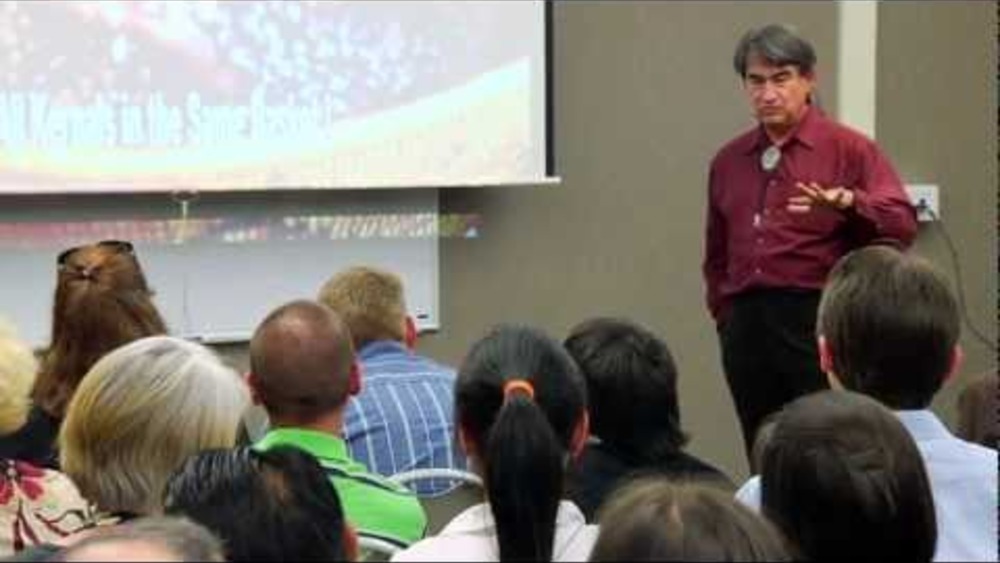
Gregory Cajete: Rebuilding Sustainable Indigenous Communities: Applying Native Science
Dr. Gregory Cajete spoke as part of the "Alternative Forms of Knowledge Construction in Mathematics and Science" lecture series in Portland, Oregon which is co-sponsored by Portland State University and Portland Community College. The series features guest speakers who examine forms of mathematical…
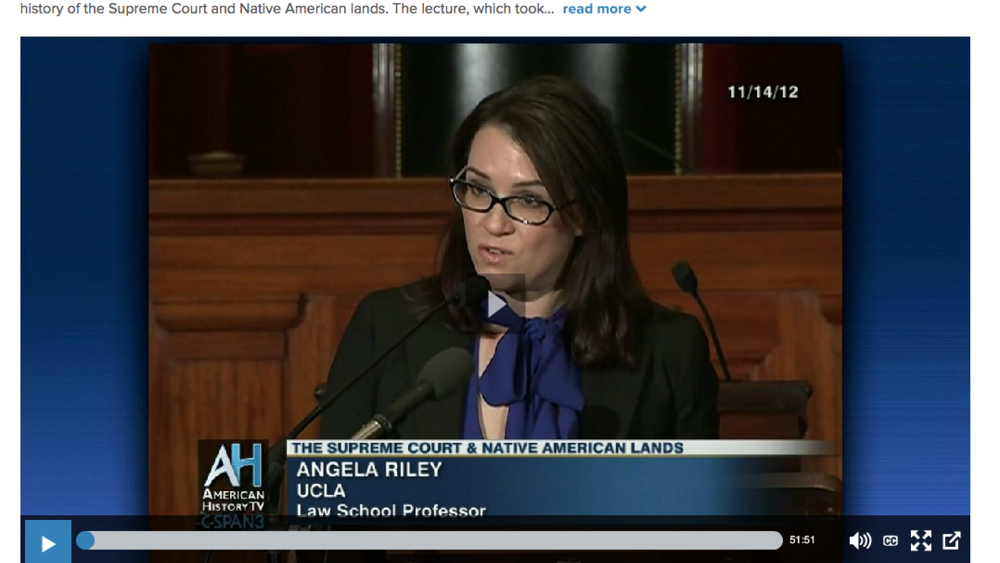
Native American Lands and the Supreme Court
Tribal judge and legal scholar Angela Riley (Citizen Potawatomi) spoke in the U.S. Supreme Court chamber about the history of the Supreme Court and Native American lands. The lecture was one in a series hosted by the Supreme Court Historical Society on the Constitution, the Supreme Court, and…

Native Nation Rebuilders Speak
Participants in the Bush Foundation's Native Nation Rebuilders Program offer their personal perspectives on nation building and share their experiences in the program.
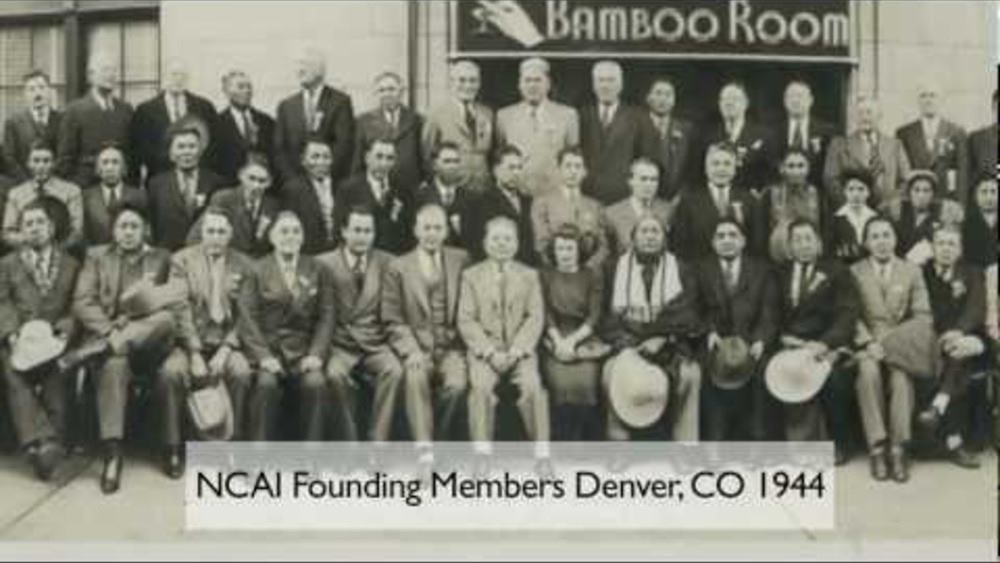
NCAI - Footprints into the Future - 68th Annual Convention and Marketplace in Portland, Oregon
The National Congress of American Indians, founded in 1944, is the oldest, largest and most representative American Indian and Alaska Native organization serving the broad interests of tribal governments and communities. NCAI has grown over the years from its modest beginnings of 100 people to…
Tribal Nations - The Story of Federal Indian Law
"Tribal Nations - The Story of Federal Indian Law" and discusses how the U.S. Supreme Court has handled Indian sovereignty over the past 50 years.
Native Report: Caricieri Decision
Native Report tackles the Caricieri Decision, a complex legal ruling that touches on issues of sovereignty, Indian gaming and the placement of tribal lands into "trust status."
Native Report: Bush Foundation: Native Nation Rebuilders
On this edition of Native Report learn about the Bush Foundation's investment in sustaining the vitality of 23 Native communities across Minnesota, North Dakota, and South Dakota. (Segment placement: 18:42-25:32)
Native Report: Jodi Gillette
On this edition of Native Report meet Jodi Gillette, Deputy Associate Director with the White House Office of Intergovernmental Affairs. (Segment placement: 18:45-25:32)
Native Report: Season 5: Episode 4
Come with us as we visit the Embassy of Tribal Nations in Washington, D.C., and talk with National Congress of American Indians President Jefferson Keel about its significance. We'll also meet Assistant Secretary of Indian Affairs Larry Echohawk about his first year in office. Then we'll sit down…
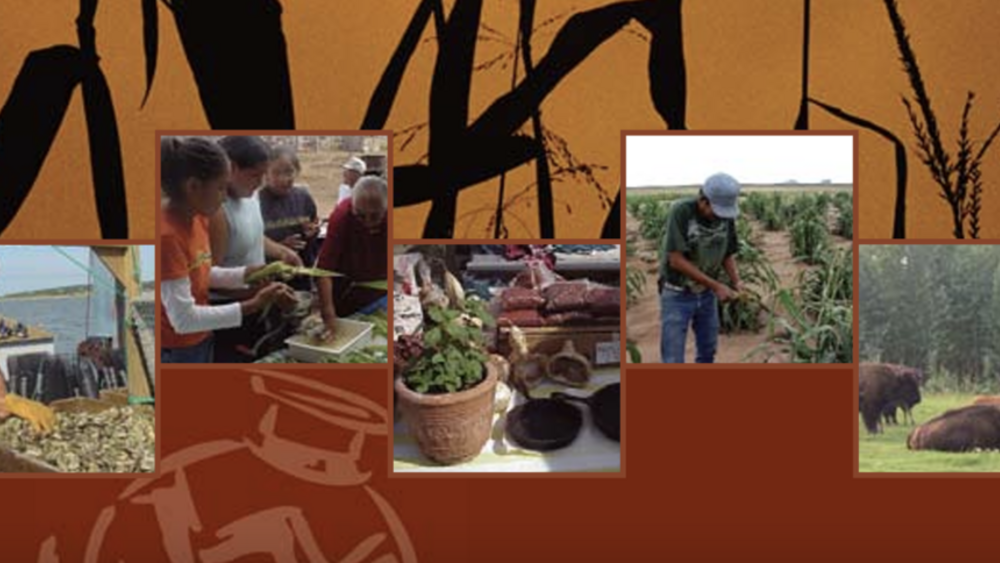
Food Sovereignty Assessment Tool
There are many assets related to Native food systems. Increased consumption of healthy and traditional foods may lead to better health among community members, preserving one of the most important assets in any community, its people. Of course, healthy, productive people are a cornerstone of any…
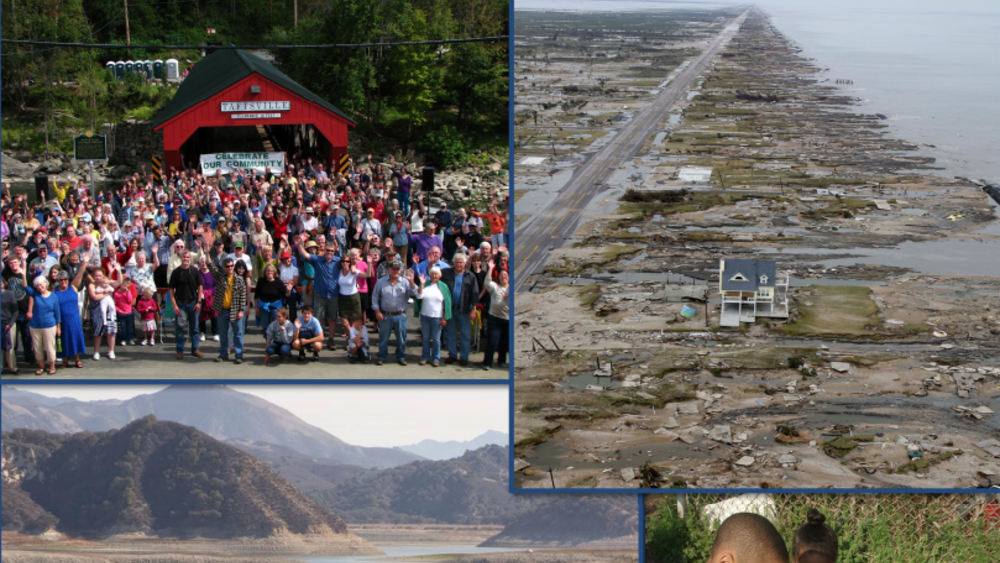
President's State, Local, and Tribal Leaders Task Force on Climate Preparedness and Resilience: Recommendations to the President
As the Third National Climate Assessment makes clear, climate change is already affecting communities in every region of the country as well as key sectors of the economy. Recent events like Hurricane Sandy in the Northeast, flooding throughout the Midwest, and severe drought in the West have…
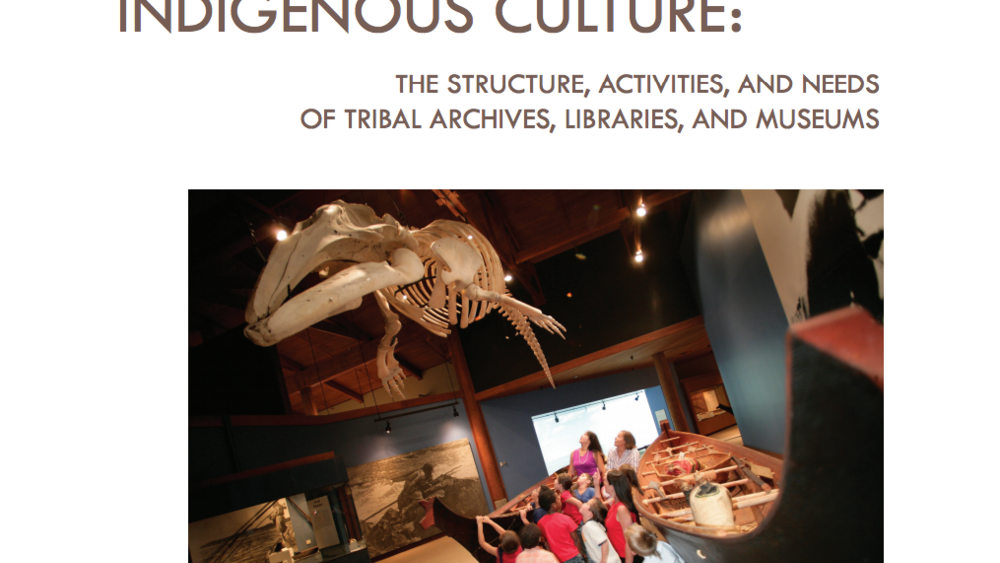
Sustaining Indigenous Culture: The Structure, Activities, and Needs of Tribal Archives, Libraries, and Museums
Sovereignty, self-determination, and self-governance are primary goals of Indigenous nations worldwide and they take important steps toward those goals by renewing control over their stories, documents, and artifacts. To better support it, a core team of Native professionals formed the…
Supplemental Recommendations of Tribal Leaders on the President's State, Local, and Tribal Leaders Task Force on Climate Preparedness and Resilience
Tribes and Alaska Native Villages feel the effects of a changing climate in ways that are unique to their ways of life, geography, and relationships with the Federal Government. According to the National Climate Assessment, “the consequences of observed and projected climate change impacts have and…