
Indigenous Governance Database
IGD Database Search
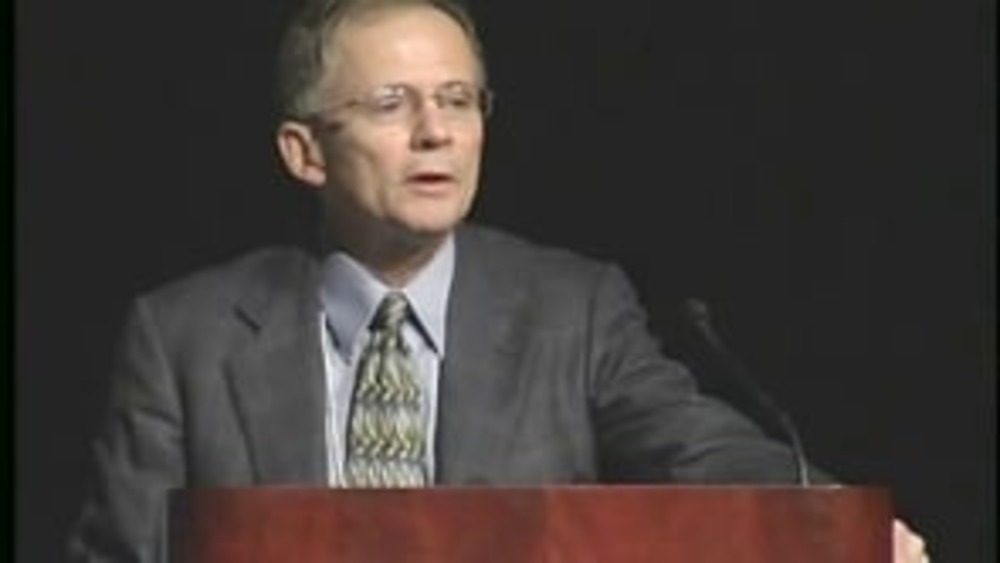
Honoring Nations: Tom Hampson: ONABEN: A Native American Business Network
Former Executive Director of ONABEN Tom Hampson presents an overview of the organization's work to the Honoring Nations Board of Governors in conjunction with the 2005 Honoring Nations Awards.
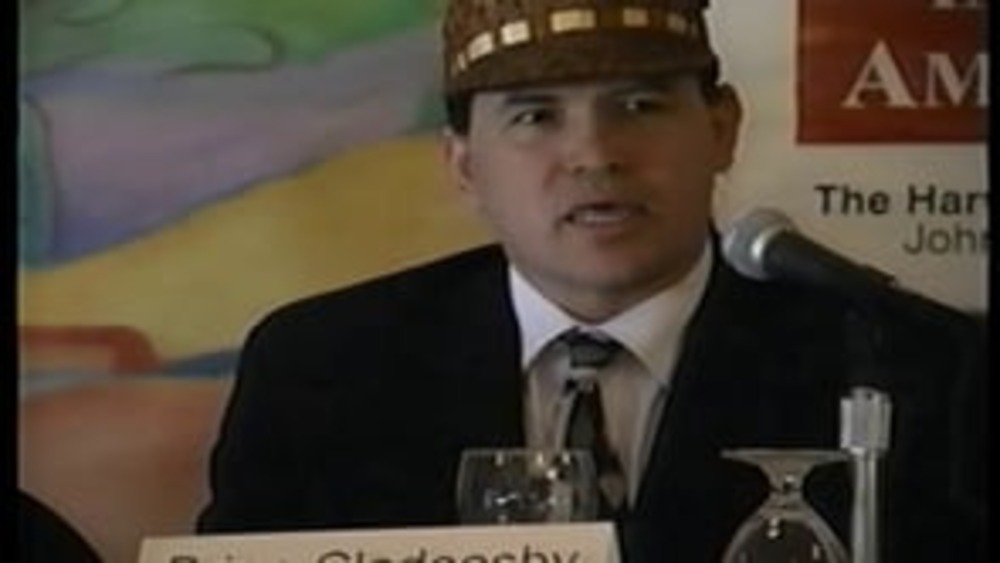
Honoring Nations: What is Good Tribal Governance and Why is it Important?: Tribal Leaders' Perspectives
Moderator Joseph P. Kalt facilitates a rich discussion by an impressive panel of Native nation leaders about the role leaders play in building and sustaining successful tribal programs.
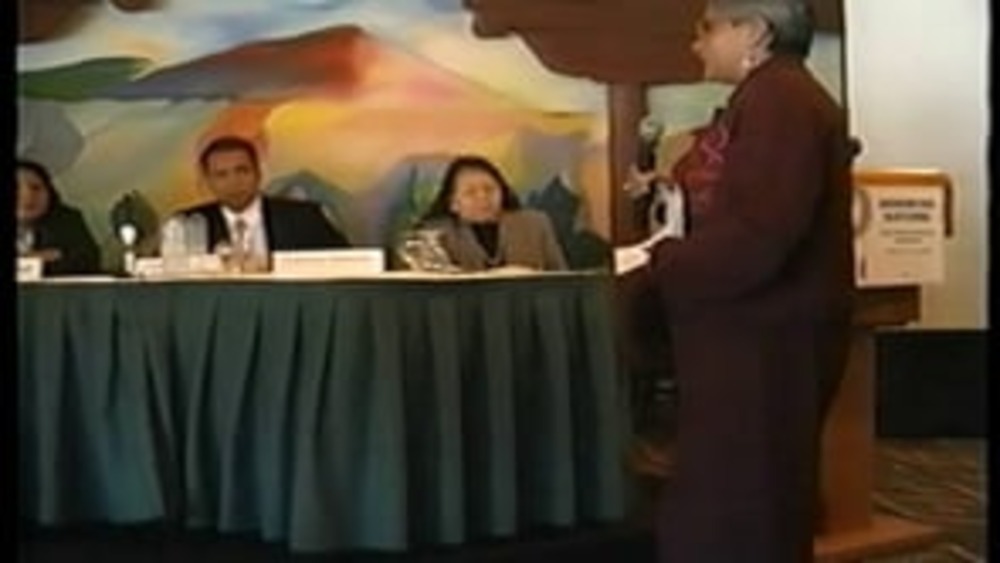
Honoring Nations: The Politics of Change - Internal Barriers, Opportunities and Lessons for Improving Government Performance
Moderator JoAnn Chase facilitates a wide-ranging discussion by a panel of Native nation leaders and key decision-makers about internal barriers inhibiting good governance and opportunities and lessons for improving government performance in Native nations.

Honoring Nations: Using Partnerships to Achieve Governing Goals
Heather Kendall-Miller moderates this panel of Native leaders for a discussion on building and maintaining intergovernmental relationships.

Honoring Nations: Tina Scott and Nan Smith: Mississippi Band of Choctaw Family Violence and Victim's Services
Program representatives Tina Scott and Nan Smith provide an overview of Mississippi Choctaw's Family Violence & Victim's Services program and discuss how its integrated approach has improved the quality and effectiveness of the services it provides to Choctaw citizens.
Honoring Nations: Glenn Gilman: Two Plus Two Plus Two Program
Hopi Junior/Senior High School Principal Glenn Gilman provides an overview of the school's award-winning Two Plus Two Plus Two program, which has built an extraordinary track record of academic achievement and college preparedness among its Hopi students.
Honoring Nations: Roger Boyd: Economic and Community Development
Economic development specialist Roger Boyd (Navajo) reports back to his fellow Honoring Nations symposium participants the consensus from his group regarding some strategies that Native nations should think about and pursue in order to build a sustainable framework for economic development.
Honoring Nations: Elizabeth Woody: Environment and Natural Resources
Elizabeth Woody reports back to her fellow Honoring Nations symposium attendees the consensus from the environment and natural resources breakout session participants, synthesizing their deliberations into four key elements for nation-building success in the environmental and natural resource…
Honoring Nations: Julia "Bunny" Jaakola: Education and Social Services
Julia "Bunny" Jaakola reports back to her fellow Honoring Nations symposium attendees about some of the keys to effective governance that the education and social services breakout session participants identified.
Honoring Nations: Robert Yazzie: The Navajo Nation Judicial Branch
Chief Justice Emeritus Robert Yazzie of the Navajo Nation Supreme Court talks about the Navajo Nation Judicial Branch's application of Navajo common law in its jurisprudence as an example of the importance of Indigenous cultural values and common law into the governance systems of Native nations.
Honoring Nations: Stephen Cornell: Achieving Good Governance: Lessons from the Harvard Project & Honoring Nations
Co-director of the Harvard Project on American Indian Economic Development Stephen Cornell offers a review of how the Honoring Nations program evolved out of the nation-building movement and successes among Native nations.

Honoring Nations: Miriam Jorgensen: Achieving Good Governance: Cross-Cutting Themes
Miriam Jorgensen, Director of Research for the Native Nations Institute and the Harvard Project on American Indian Economic Development, shares the cross-cutting themes of good governance that exist among the Honoring Nations award-winning programs.
From the Rebuilding Native Nations Course Series: "The Role of Bureaucracies in Nation Building"
Native leaders discuss the critical role that bureaucracies play in Native nations' efforts to achieve their nation-building and community development priorities.
From the Rebuilding Native Nations Course Series: "What Effective Bureaucracies Need"
Native leaders offer their perspectives on the key characteristics that Native nation bureaucracies need to possess in order to be effective.
National Native American Economic Policy Summit: Lance Morgan: Policy
The National Native American Economic Policy Summit was held in Phoenix, Arizona, May 15-17, 2007, with more than 500 key stakeholders gathering to discuss the challenges to growing healthy, vibrant Native economies. In addition to identifying challenges, participants were asked to recommend…
Jamie Fullmer: Taking a Strategic Approach at Yavapai-Apache Nation
Jamie Fullmer, former chairman of the Yavapai-Apache Nation, discusses how his nation developed a strategic approach to tackling its nation-building challenges during his time in office. He stresses the importance of Native nations and leaders conducting comprehensive of the state of their…
Honoring Nations: Julia "Bunny" Jaakola: Turning Sovereignty into a Practical Reality: The Fond du Lac Band of Lake Superior Chippewa
Julia "Bunny" Jaakola shares how the Fond du Lac Band of Lake Superior Chippewa turned sovereignty into a practical reality through leadership, community engagement, and collaboration with outside entities.
Honoring Nations: Jon Cooley: Building Capable Institutions of Self-Governance: White Mountain Apache Wildlife and Recreation Program
Jon Cooley, former director of the White Mountain Apache Tribe's Wildlife and Outdoor Recreation division, discusses how their program went about building capable institutions of self-governance in order to manage the Tribe's natural resources -- specifically wildlife -- in a sustainable manner.

Honoring Nations: Lori Gutierrez: Using Culture as a Resource: Poeh Center
Lori Gutierrez shares Pojoaque Pueblo's journey of cultural preservation and revitalization, and its keys to using culture as a resource in the establishment of the Poeh Cultural Center and Museum.
Honoring Nations: Justin Martin: Enhancing Government-to-Government Relationships
Justin Martin, Former Director of Intergovernmental Affairs at Grand Ronde, discusses his nation's relationship in previous years with the state government, and how Grand Ronde was able to build and sustain success over time in the state's legislative arena.